Separate outside noise, echo, and vibration.
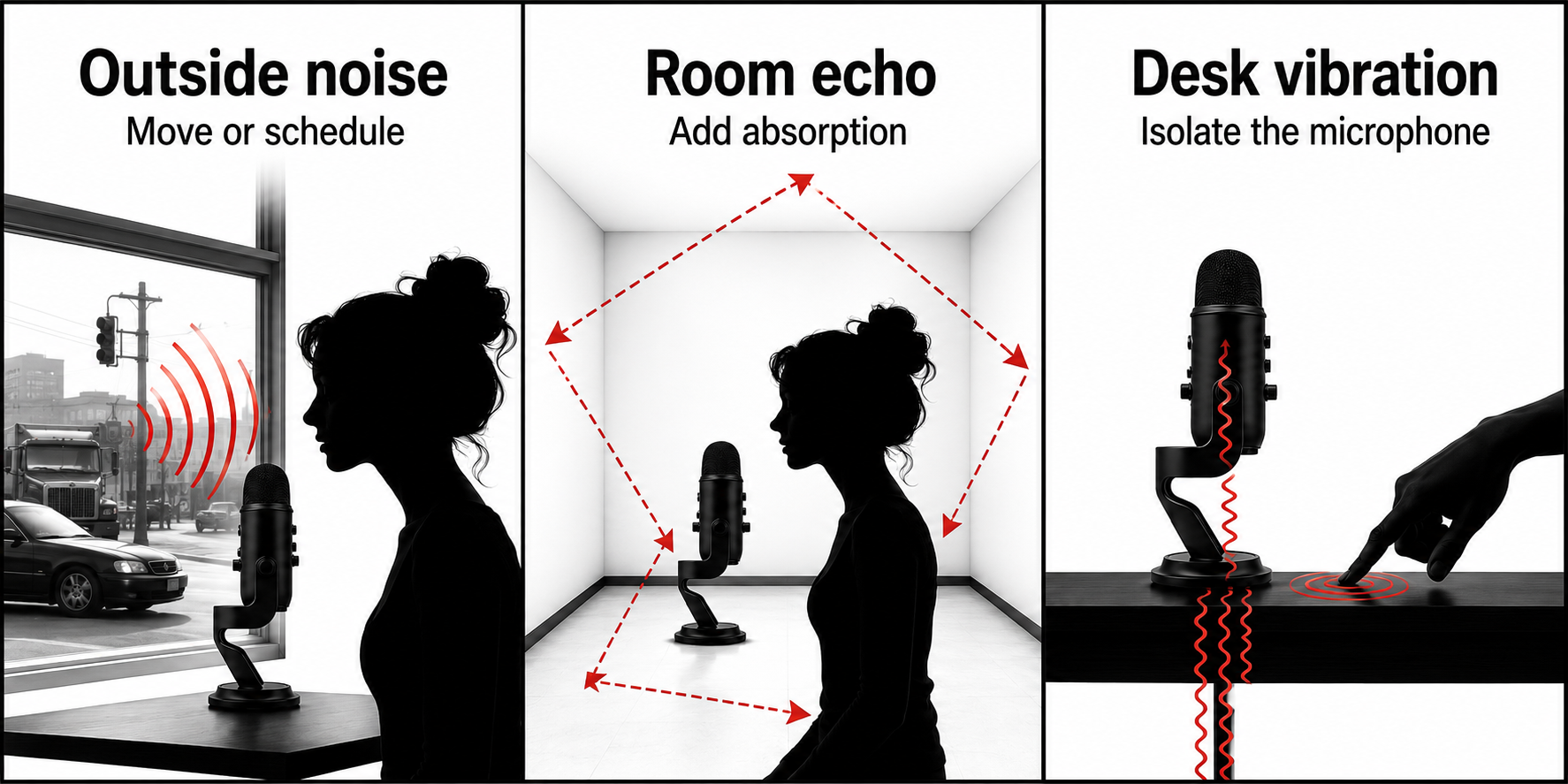
They sound different and require different fixes. Acoustic foam is relevant to an untreated room with audible reflection—not traffic, voices through walls, HVAC, or desk thumps.
Run three tests
- Room tone.Record 30 seconds without touching anything. Listen for traffic, HVAC, fans, people, and electrical hum.
- Clap test.Clap once near the microphone. A sharp ring or flutter is reflection, not outside noise.
- Desk test.Tap the desk and move the cable. Low thumps are mechanical vibration.
Room-first plan
Room-first rescue plan
Keep the current recorder. Diagnose outside noise, reflections, and vibration separately, then buy only the matching fix—including exact acoustic foam when an untreated room has audible flutter echo.
Why this setup: A more sensitive condenser records more of the same traffic, HVAC, and reflections. The room is the bottleneck, not the model number.
Do not buy it when: Avoid foam sold as soundproofing. Thin foam changes reflections; it does not stop outside noise.
Compatibility: Works with any current recording device because the plan changes the environment rather than the signal chain.
Room action: Run room tone, clap, and desk-vibration tests before ordering treatment.
Current phone or microphone
Keep as the recorder · Required
Do not upgrade the recorder until the room is measured by comparison.
Blankets, duvets, curtains, pillows
Free reflection control · Start here
Use dense soft material around the recording corner before buying treatment.
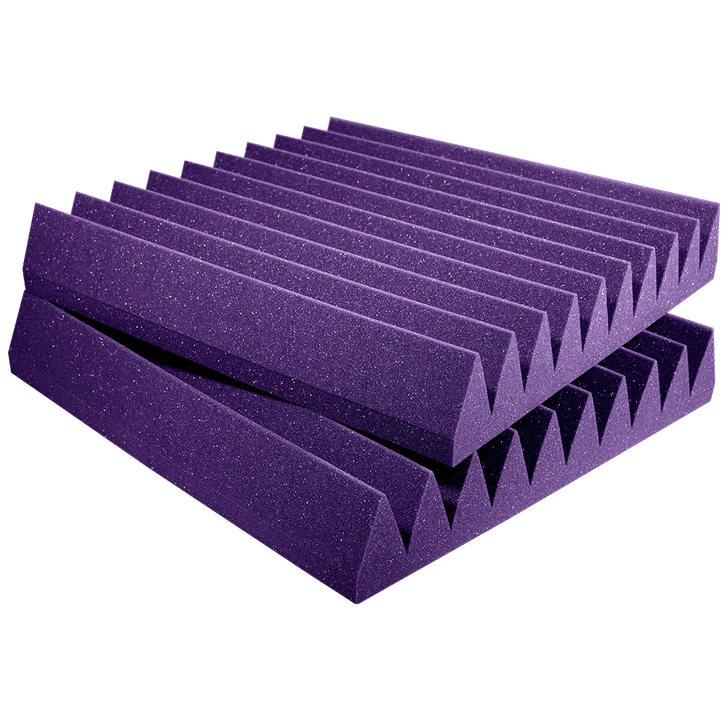
Auralex Studiofoam Wedges 2-inch 12-pack
Best for: Reducing mid/high-frequency reflections and flutter echo in an untreated recording corner
A branded acoustic-foam option for creators whose clap test reveals room ring or flutter echo. It treats reflections around the microphone; it does not block traffic, neighbors, HVAC, or other outside noise.
Use for flutter echo in an untreated room; not for traffic or neighbor noise.
- A placement plan based on a clap test or identified reflection point.
- A surface-safe mounting method appropriate for the wall and foam.
- A separate solution for outside noise; acoustic foam is not soundproofing.
Open Amazon to confirm the current price, seller, availability, and exact bundle contents. Prefer Amazon.com, the brand storefront, or an authorized dealer.
Weatherstrip, rug pad, or isolation mat
Problem-specific treatment · Optional
Match the purchase to air gaps, floor reflection, or desk vibration.
Exact acoustic foam recommendation
Use the Auralex option only when the clap test identifies mid/high-frequency flutter echo. Place a limited number of panels near the closest reflection points and compare recordings before buying more.
Auralex Studiofoam Wedges 2-inch 12-pack
Best for: Reducing mid/high-frequency reflections and flutter echo in an untreated recording corner
A branded acoustic-foam option for creators whose clap test reveals room ring or flutter echo. It treats reflections around the microphone; it does not block traffic, neighbors, HVAC, or other outside noise.
Pros, limits, and setup notes
Strengths
- Exact acoustic-treatment product rather than a vague foam search
- Useful for mid/high reflection control
- Modular panels can target a small recording corner
Limits
- Not soundproofing
- Thin foam does little for low-frequency noise
- Placement matters more than decorative coverage
Setup note: Run a clap test first. Treat the wall behind or beside the microphone and compare recordings before adding more panels.
Do not buy it when: The audible problem is traffic, voices through a wall, low-frequency rumble, or desk vibration rather than room reflection.
- A placement plan based on a clap test or identified reflection point.
- A surface-safe mounting method appropriate for the wall and foam.
- A separate solution for outside noise; acoustic foam is not soundproofing.
Open Amazon to confirm the current price, seller, availability, and exact bundle contents. Prefer Amazon.com, the brand storefront, or an authorized dealer.
Fix by problem
Move or schedule
Choose an interior room, close gaps, stop fans, and record at the quietest hour. Acoustic foam does not block traffic.
Add dense material or targeted foam
Use duvets, heavy curtains, a wardrobe, rugs, furniture, or exact acoustic panels around the recording corner.
Break the physical path
Use a soft pad under the included stand first; add an arm only when vibration or positioning remains a problem.
Increase distance
Move the computer away, use a compliant longer cable, or record to a portable device.
Shop additional room and vibration fixes
Buy only after the test identifies the matching problem. These products absorb reflections, close gaps, or reduce mechanical transfer; they do not create structural soundproofing.
Heavy Moving Blankets Sound Dampening
Use this only for the specific reflection, vibration, or outside-noise problem described in the guide; verify mounting and room-surface compatibility.
Check current price on Amazon → · paid linkRoom treatmentHeavy Blackout Curtains
Use this only for the specific reflection, vibration, or outside-noise problem described in the guide; verify mounting and room-surface compatibility.
Check current price on Amazon → · paid linkRoom treatmentDoor Weatherstripping Sound
Use this only for the specific reflection, vibration, or outside-noise problem described in the guide; verify mounting and room-surface compatibility.
Check current price on Amazon → · paid linkRoom treatmentMicrophone Isolation Pad
Use this only for the specific reflection, vibration, or outside-noise problem described in the guide; verify mounting and room-surface compatibility.
Check current price on Amazon → · paid linkRoom treatmentArea Rug Pad Sound
Use this only for the specific reflection, vibration, or outside-noise problem described in the guide; verify mounting and room-surface compatibility.
Check current price on Amazon → · paid linkRoom treatmentAcoustic Foam Mounting Tabs
Use this only for the specific reflection, vibration, or outside-noise problem described in the guide; verify mounting and room-surface compatibility.
Check current price on Amazon → · paid linkWhen a microphone upgrade is justified
Record the same whisper at the same distance in the improved room. Upgrade only when the remaining audible limitation is microphone self-noise, pickup pattern, stereo capability, or device compatibility.