Choose the standard 3Dio Free Space or the two-XLR recording chain.
The standard model has a stereo 3.5 mm output and needs a compatible input. The XLR model adds a more robust two-channel recorder workflow. Neither microphone solves room noise by itself.
Standard 3Dio Free Space
This is the classic ear-shaped ASMR microphone. It is not a direct USB microphone, so confirm the stereo microphone input before buying.
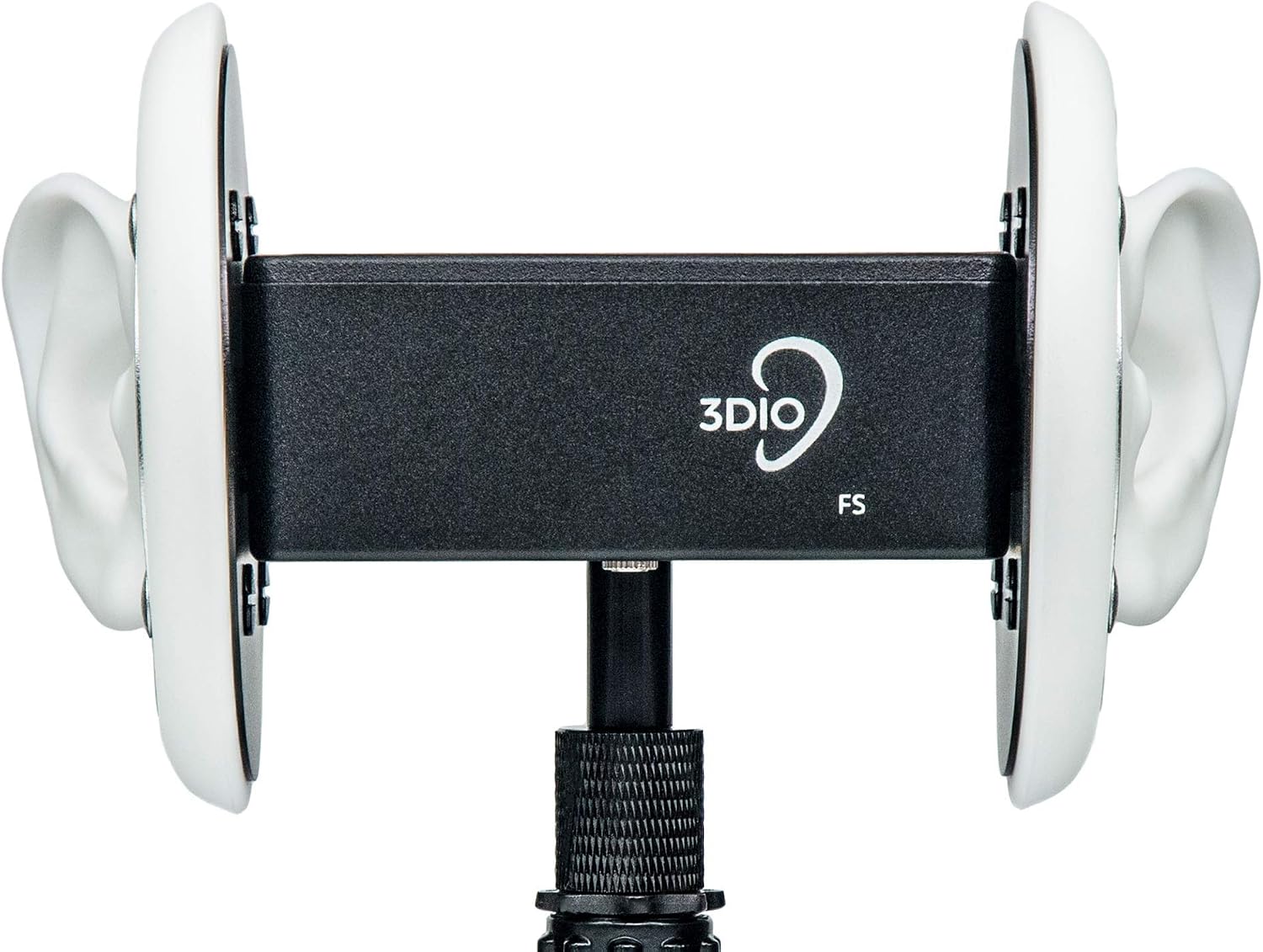
3Dio Free Space (FS)
Best for: The recognizable ear-shaped ASMR microphone with a simpler stereo output
The standard 3Dio Free Space places matched microphone capsules inside silicone ears and sends a stereo signal through a 3.5 mm output. It is the familiar binaural microphone seen in many ear-to-ear ASMR videos.
Pros, limits, and setup notes
Strengths
- True ear-shaped spatial cues
- Simpler than a two-XLR version
- Includes a hard case and splitter cable
Limits
- Still needs a compatible recording input
- Sensitive to room noise
- Much more expensive than a Blue Yeti
Setup note: Confirm that the recording input is stereo, label left and right, and run a room-noise test before filming.
Do not buy it when: You only need ordinary stereo movement or have no compatible stereo microphone input.
- A recorder, camera, or interface with a compatible stereo 3.5 mm microphone input.
- A stereo 3.5 mm cable and the required internal battery for the exact model.
- A stable stand or support and wired monitoring from the recorder.
Open Amazon to confirm the current price, seller, availability, and exact bundle contents. Prefer Amazon.com, the brand storefront, or an authorized dealer.
Common supporting gear
Portable Recorder Stereo 3.5 mm Microphone Input
Use it to complete the recording, support, power, cable, or monitoring chain. Verify connector and device compatibility before ordering.
Check current price on Amazon → · paid linkAudio accessory3.5 mm Stereo Microphone Cable
Use it to complete the recording, support, power, cable, or monitoring chain. Verify connector and device compatibility before ordering.
Check current price on Amazon → · paid linkAudio accessory9V Batteries
Use it to complete the recording, support, power, cable, or monitoring chain. Verify connector and device compatibility before ordering.
Check current price on Amazon → · paid linkAudio accessory3dio Microphone Stand
Use it to complete the recording, support, power, cable, or monitoring chain. Verify connector and device compatibility before ordering.
Check current price on Amazon → · paid linkTrue binaural kit under $1,000
A true two-XLR 3Dio audio chain that stays near $1,000 by reusing the phone or camera, tripod, and lighting you already own.
Why this setup: The ear-shaped microphone creates the spatial cue; the recorder supplies two XLR inputs, phantom power, storage, and portable monitoring.
Do not buy it when: Do not choose this when you also need to buy a new camera, tripod, and lighting inside the same $1,000. Choose the balanced creator studio or raise the budget.
Compatibility: The 3Dio uses two XLR channels with phantom power. EarPods connect to the recorder headphone output for low-visibility monitoring.
Room action: Binaural capture makes room problems obvious. Treat nearby reflections and record a full minute of room tone before the session.
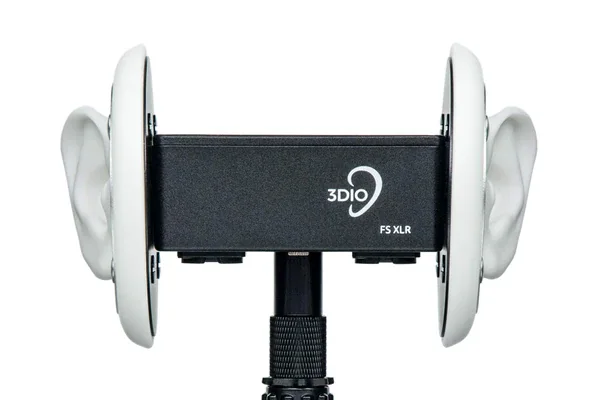
3Dio Free Space XLR
Best for: Ear-to-ear roleplay and repeatable binaural triggers
A dummy-head-style microphone with two silicone ears and separate left and right XLR outputs. It is the core of the site's under-$1,000 binaural setup.
Separate left and right XLR outputs.
- A two-channel recorder or audio interface with suitable microphone inputs.
- Two XLR cables and a stable stand/support.
- Verify the exact model’s power requirements before enabling phantom power.
- Wired headphones or in-ear monitors connected to the recorder/interface.
Open Amazon to confirm the current price, seller, availability, and exact bundle contents. Prefer Amazon.com, the brand storefront, or an authorized dealer.
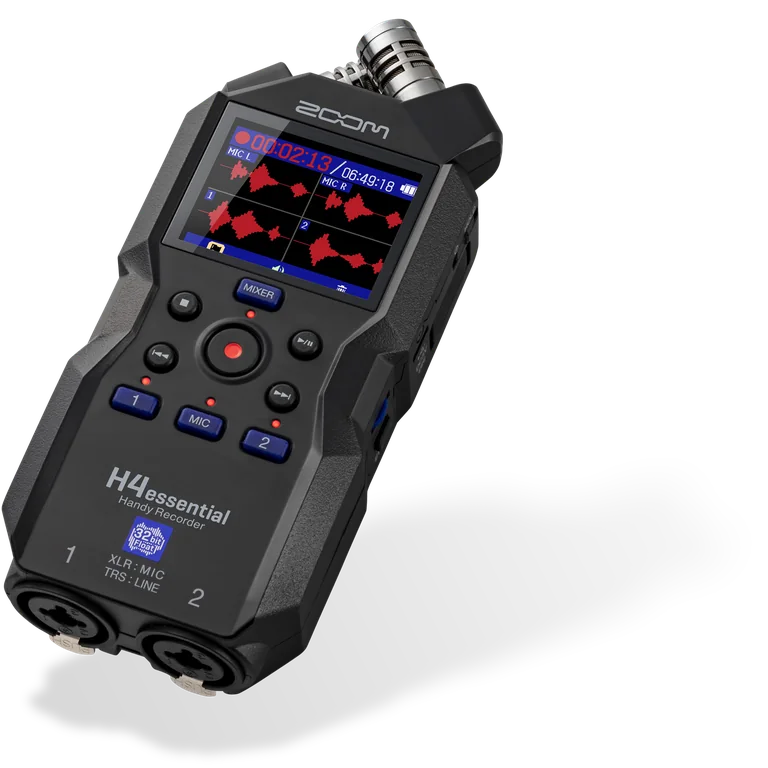
Zoom H4essential
Best for: Recording a two-channel binaural rig without a laptop
A portable 32-bit-float recorder with two XLR/TRS inputs and phantom power. It supplies the two input channels required by the 3Dio setup and can also act as a USB audio interface.
Two XLR inputs, phantom power, and headphone monitoring.
- A compatible SD card and batteries or USB power.
- XLR cables when using external XLR microphones.
- Wired headphones or in-ear monitors.
Open Amazon to confirm the current price, seller, availability, and exact bundle contents. Prefer Amazon.com, the brand storefront, or an authorized dealer.
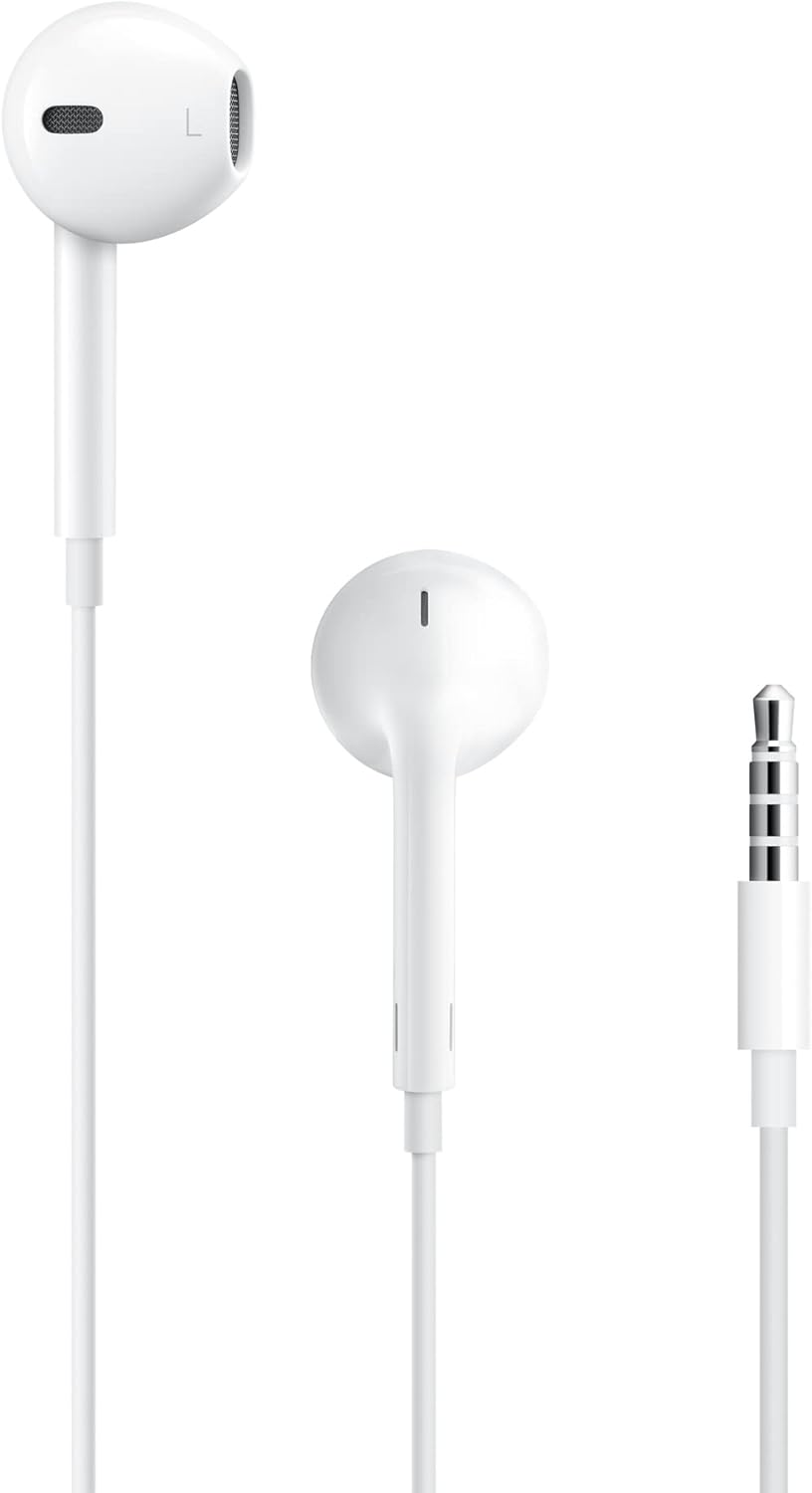
Apple EarPods (3.5 mm)
Best for: Low-visibility on-camera monitoring and intentional lo-fi recording on compatible 3.5 mm devices
The 3.5 mm EarPods are the most useful studio companion of the three versions: plug them into a Blue Yeti, USB microphone, recorder, or interface for discreet monitoring, or use the inline microphone on a compatible TRRS device for intentional lo-fi ASMR.
Check left-right orientation without wearing large headphones on camera.
Open Amazon to confirm the current price, seller, availability, and exact bundle contents. Prefer Amazon.com, the brand storefront, or an authorized dealer.
Two XLR cables, SD card, camera or phone, tripod, and lighting
Connection, storage, and existing visual chain · Required
The under-$1,000 total assumes the video support and light are already owned.
Recorder or computer interface
The Zoom H4essential is the portable choice in the complete kit. The Scarlett 2i2 is the computer-based alternative when recording stays at one desk.
Zoom H4essential
Best for: Recording a two-channel binaural rig without a laptop
A portable 32-bit-float recorder with two XLR/TRS inputs and phantom power. It supplies the two input channels required by the 3Dio setup and can also act as a USB audio interface.
- A compatible SD card and batteries or USB power.
- XLR cables when using external XLR microphones.
- Wired headphones or in-ear monitors.
Open Amazon to confirm the current price, seller, availability, and exact bundle contents. Prefer Amazon.com, the brand storefront, or an authorized dealer.
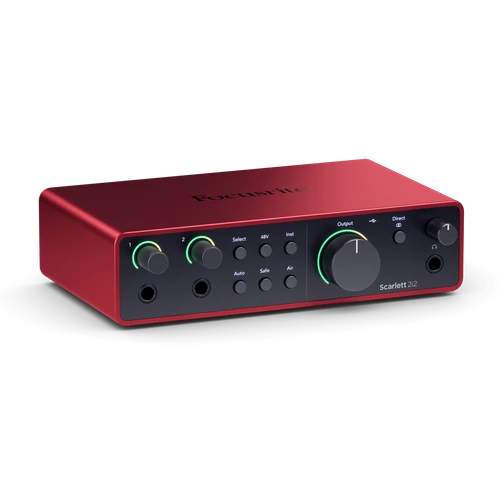
Focusrite Scarlett 2i2 4th Gen
Best for: Two-microphone or two-channel XLR recording on a computer
A two-input USB-C audio interface for creators who want separate left and right XLR microphones or a studio condenser chain. It is the straightforward computer-based alternative to a portable recorder.
- A computer and compatible USB-C connection.
- XLR cables for microphones and 48 V phantom power for condensers that require it.
- Wired headphones or in-ear monitors.
Open Amazon to confirm the current price, seller, availability, and exact bundle contents. Prefer Amazon.com, the brand storefront, or an authorized dealer.
Apple EarPods (3.5 mm)
Best for: Low-visibility on-camera monitoring and intentional lo-fi recording on compatible 3.5 mm devices
The 3.5 mm EarPods are the most useful studio companion of the three versions: plug them into a Blue Yeti, USB microphone, recorder, or interface for discreet monitoring, or use the inline microphone on a compatible TRRS device for intentional lo-fi ASMR.
Open Amazon to confirm the current price, seller, availability, and exact bundle contents. Prefer Amazon.com, the brand storefront, or an authorized dealer.
Other required accessories
Pair Mogami Gold Studio 10 XLR Cables
Use it to complete the recording, support, power, cable, or monitoring chain. Verify connector and device compatibility before ordering.
Check current price on Amazon → · paid linkVideo accessorySanDisk Extreme Pro 128GB SDXC
Use it to stabilize framing, lighting, capture, or the background. Verify load rating, mount type, power, and included accessories.
Check current price on Amazon → · paid linkAudio accessory3.5 mm Wired Earbuds
Use it to complete the recording, support, power, cable, or monitoring chain. Verify connector and device compatibility before ordering.
Check current price on Amazon → · paid linkAudio accessoryPortable Audio Recorder Case
Use it to complete the recording, support, power, cable, or monitoring chain. Verify connector and device compatibility before ordering.
Check current price on Amazon → · paid linkSignal flow
- Left 3Dio XLR outputConnect to recorder or interface input 1.
- Right 3Dio XLR outputConnect to input 2.
- Enable phantom powerFollow the microphone and recorder instructions.
- Monitor with wired in-ear earphonesVerify left-right orientation without large headphones in frame.
- Record a movement testMove one prop around the ears before filming the full scene.
Lower-cost stereo alternative
Blue Yeti stereo mode can teach left-right movement at a much lower price, but it does not reproduce the physical ear cues of a 3Dio.
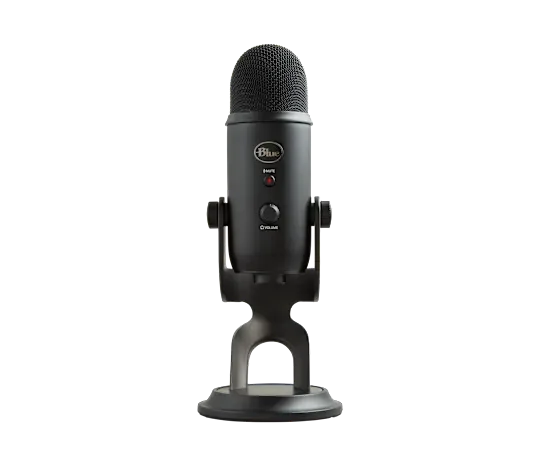
Blue Yeti (Logitech G)
Best for: Stereo tapping and brushing with a simple desk-first workflow
The classic Blue Yeti multipattern USB microphone. Its included desk stand is enough to start: use stereo mode for left-right trigger movement and cardioid mode for centered whispering or roleplay. A boom arm is an optional upgrade, not a required purchase.
Pros, limits, and setup notes
Strengths
- Selectable stereo and cardioid modes
- Included weighted desk stand works out of the box
- Headphone monitoring and on-mic controls
Limits
- The desk stand can transmit bumps from the recording surface
- Can capture more room sound than expected
- Stereo mode is not true ear-shaped binaural capture
Setup note: Start on the included stand over a soft desk pad or folded towel. Add a weight-rated boom arm later only when desk vibration, positioning, or framing becomes a real problem. For phone use, test the exact phone, adapter, power path, and recording app before buying around the Yeti.
Do not buy it when: Your room is noisy or you only record centered close-up whispers.
- A computer with USB for the most predictable setup.
- The included weighted desk stand is enough to start.
- A boom arm is optional and must support the microphone’s weight.
- Phone use may require a data-capable adapter and adequate power; compatibility is not universal.
Open Amazon to confirm the current price, seller, availability, and exact bundle contents. Prefer Amazon.com, the brand storefront, or an authorized dealer.
Room requirement
Ear-shaped microphones still capture traffic, fans, voices, and reflections. Use an interior room, turn off avoidable noise, and add targeted acoustic treatment only when a clap test identifies reflection problems.
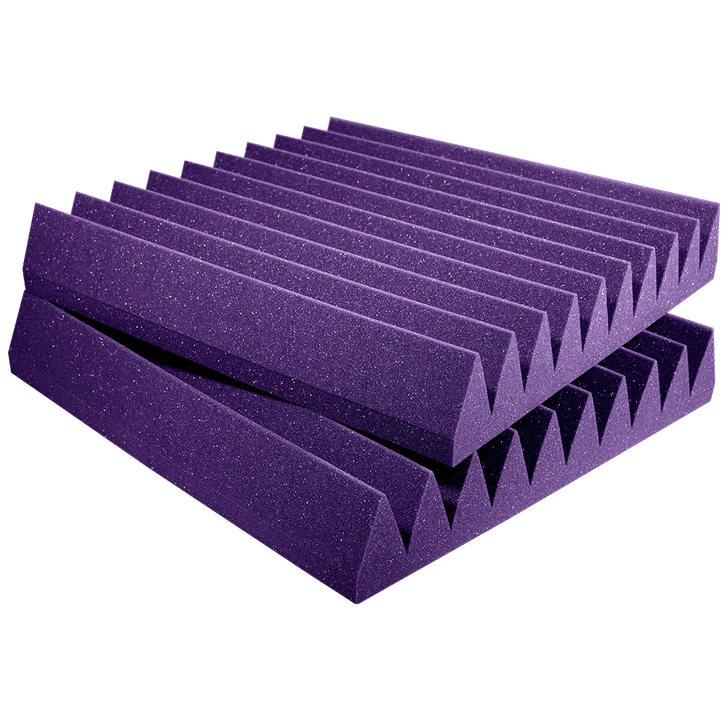
Auralex Studiofoam Wedges 2-inch 12-pack
Best for: Reducing mid/high-frequency reflections and flutter echo in an untreated recording corner
A branded acoustic-foam option for creators whose clap test reveals room ring or flutter echo. It treats reflections around the microphone; it does not block traffic, neighbors, HVAC, or other outside noise.
- A placement plan based on a clap test or identified reflection point.
- A surface-safe mounting method appropriate for the wall and foam.
- A separate solution for outside noise; acoustic foam is not soundproofing.
Open Amazon to confirm the current price, seller, availability, and exact bundle contents. Prefer Amazon.com, the brand storefront, or an authorized dealer.